
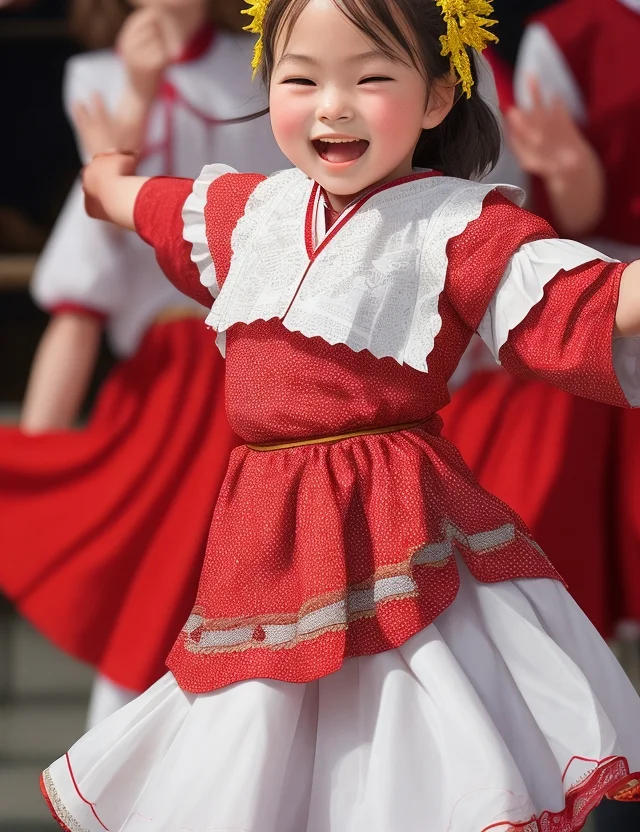
Kids happen to be the purest souls; they usually don’t discriminate. Once, there was a girl in a school who used to take part in lots of cultural programs. One time, she took part in a folk dance, and because she was a good dancer, she was kept in the first row by her teammates.
In the final round of selection, the selection committee asked her to go to the back row, and a white girl with beautiful features was moved to her place. The white girl was a good person; she kept on apologizing to her friend as she held herself responsible. While the girl appreciated her gorgeous friend’s good intentions, she unwittingly discovered that in order to be the main dancer, she needed to be attractive according to society’s standards.
It not only impacted the way she thought about dancing, but it also created an unconscious bias in her mind for beautiful people, and this is how most unconscious biases start making their place in our subconscious minds.
We are social beings; we grow up in society. We pick up the good and bad from the same. The teaching says that discrimination based on color, race, religion, or gender is not good; hence, we invite people of different beliefs or cultures to our homes, and we go to their homes when we get the invitation.
We celebrate, work, study, and sometimes live with others without feeling any bias. These are examples of explicit bias, and we find ourselves eliminating these biases from our lives.
The problem arises when we unconsciously fall prey to implicit biases that are deeply rooted in our veins. These biases are the result of our environment and background.
Knowingly, nobody wants to be called biased or prejudiced, yet a hiring manager who works and hires for a diverse organization may recruit a person who has a similar point of view, interests, experience, and background, which does not add to the growth and diversity.
The recruitment process shouldn’t be affected by similar or different interests or backgrounds, but in most cases, it does, and this is an example of implicit bias.
Implicit bias
Implicit bias is an unconscious attitude or stereotype that people unconsciously attribute to another individual or group of people that affects their conduct or their meeting with them. The effects of implicit bias may not be seen or felt immediately; however, over time, it changes the mindset and behavior of a person.
Having an unconscious bias doesn’t make a person evil; sometimes, people are unaware of their conduct. People mostly create bias by categorizing the details they get regularly. A mere tattoo, haircut, dressing sense, eating habits, way of talking, vicinity, school, or educational background—people have categories of every possible detail associated with an individual or a group in their subconscious mind for judging or stereotyping others.
Taking the example of the story shared, the girl might find herself comparing with others based on looks for her entire life, she might struggle to lead any role given, or she might have a bias for good-looking people.
It may seem difficult not to have bias, especially unconscious ones, though it can be minimized or suppressed to an extent with proper guidelines.
Conscious Effort and Acceptance
The first step in the guideline is to accept and become consciously aware of your implicit bias. When we talk about bias, we are most likely to exclude ourselves from the conversation.
The thought of having bias seems impossible when we are in question. Believe it or not, every other human being is guilty of having unconscious bias.
People from every part of the world have preferences based on color, race, religion, and other characteristics. These preferences lead them down the path of implicit bias. These people claim to be the most neutral; still, they favor their group.
Educating each other in every instance can be the beginning of the elimination of bias. Speak out if you see someone unknowingly succumbing to bias, or ask others to guide you when they find you making a decision based on implicit bias.
It is the first and most crucial step to consider rational thoughts while making any decision, be it a recruitment process, punishment or reward for students, or promoting or sacking an employee. Decisions free from any iota of bias can yield a concrete result, leaving no scope for doubt.
Dripping water hollows out stone, not through force but by persistence. So, addressing the issue once and twice is not enough; persistent and conscious effort is essential to make ourselves immune to implicit bias.
Don’t always trust your instinct
“No matter what, trust your instincts.” You have often heard this phrase. Most of the time, it is correct; however, when you are dealing with or addressing bias, you need to analyze the basis of your opinion.
Are you forming an opinion for someone after careful consideration, or is it based on your gut feeling? Ask yourself some questions: will you be thinking the same for that person if they are from a different group, race, or gender, or have dressed according to your preferences?
Focus on the answers that your gut is providing you at the moment, and then consciously drive your unconscious bias towards a positive belief. Tell yourself repeatedly, ‘So what if that person is different from my set of likes and preferences, I am also different from their likes and preferences, and this is what makes both of us unique.’
The first good deed starts from home: dealing with Unconscious bias
While it is easier to preach about consciously activating the brain for any signal of bias, it is equally important to keep it alert in every part of our lives. A home is a place that witnesses the harsh reality of our implicit bias. Whether it is the behavior with our house help or talking about our colleagues, we do not pretend or put on our masks.

You need to constantly remind yourself of all the precautions you have been taking to limit the impact of implicit bias. You might find yourself weak at keeping up with the resolution, but a constant reminder will keep you on the right track.
Talk with your family about the ill effects of bias and how everyone at home is responsible for educating and reminding each other. Start by sharing good things about work, colleagues, and positive stories with each other; appreciate the house help; and thank them more often.
Follow a golden rule: whenever you find yourself on the verge of creating bias, empathize with the person and situation; there is nothing that works like magic but empathy.
Set an example at your workplace
Whether you are a manager, supervisor, trainer, or trainee, an encounter with bias is nothing foreign. We try to keep ourselves away from bias in our working environment, but the unconscious mind innocently commits the mistake. The influence of bias in our behavior can trigger us to favor or discriminate without our realization. When bias is prevalent in the workplace, it struggles to maintain employee retention, productivity, loyalty, and diversity. There are various types of bias that can affect the culture of a workplace.

- The Kinship Bias – Showing preference on the basis of familiar or similar likes, experiences, and backgrounds
- The Validation Bias – Looking for evidence that can support the initial opinion we made for someone. Suppose you have a belief that people from certain places have certain characteristics, likes, and dislikes. You look for confirmation of your bias in their behavior.
- The Attribution Bias – It is associated with our view of failure and success. When we see others succeeding, we tend to associate that with luck, and for failure, we assume this is due to their lack of skill or hard work. However, when the same thing happens to us, we give credit to hard work and skills for success, and we blame luck for our failure.
- The Conformity Bias – The exchange of ideas and suggestions takes place frequently at the workplace. Usually, people want to avoid any altercation, so they believe that to blend in with the organization, they should match their opinion with the majority. Working on this bias is achievable; asking the team to drop their ideas in writing after the meeting anonymously can be a good initiative. Everyone will find the gradual reduction of conformity bias in them.
- The Halo Effect – We are all guilty of putting someone on a pedestal who we think has achieved something remarkable. Now, don’t get me wrong; there is nothing wrong with the appreciation. The problem arises when we think that if someone is from a prestigious college, organization, or family, they should get all the glory. Keep this one aspect from them and check if they still stand out from the rest; it will help you treat them equally with others.
- The Horns Effect – It contrasts with the halo effect bias; we see one negative aspect or failing of someone and oversee their positive aspect or achievement.
- The gender bias – Now, it is the most rampant bias at any workplace. It has some detrimental effects and can lead people into trouble for discriminating. Overcoming this bias is an ever-challenging task, yet the steps are easy: you only need to treat everyone equally, regardless of gender.
Biases are a part of our behavior toward others and can be tackled with conscious efforts.
- Being aware of your bias can be a good beginning.
- Widen your circle of acquaintances and bring in more diversity in your friend circle.
- Try to give yourself some time before you come to any conclusion. Avoid the “first impression is the last impression” rule.
- Invest some time, either in training or some webinar that encourages people to identify and accept their bias and ways of overcoming it.
- If others have some unconscious bias toward you, do not try reciprocating it. Give some leeway, and if possible, edify without offending them.
The world can be a better place if every other human being starts working on neutralizing their bias. Being neutral is the key to conquering the grueling task of keeping our bias in check. Show bias, and you lose; behave neutral, and you win.
What are your opinions on unconscious bias? Feel free to share with us until then.
HAPPY NEUTRALIZING!